Ironman 70.3 Preparation: Complete Guide to Training, Nutrition, and Race Strategy
Learn how to prepare for an Ironman 70.3 with smart training, practical nutrition, pacing strategy, and recovery principles for better performance on race day.
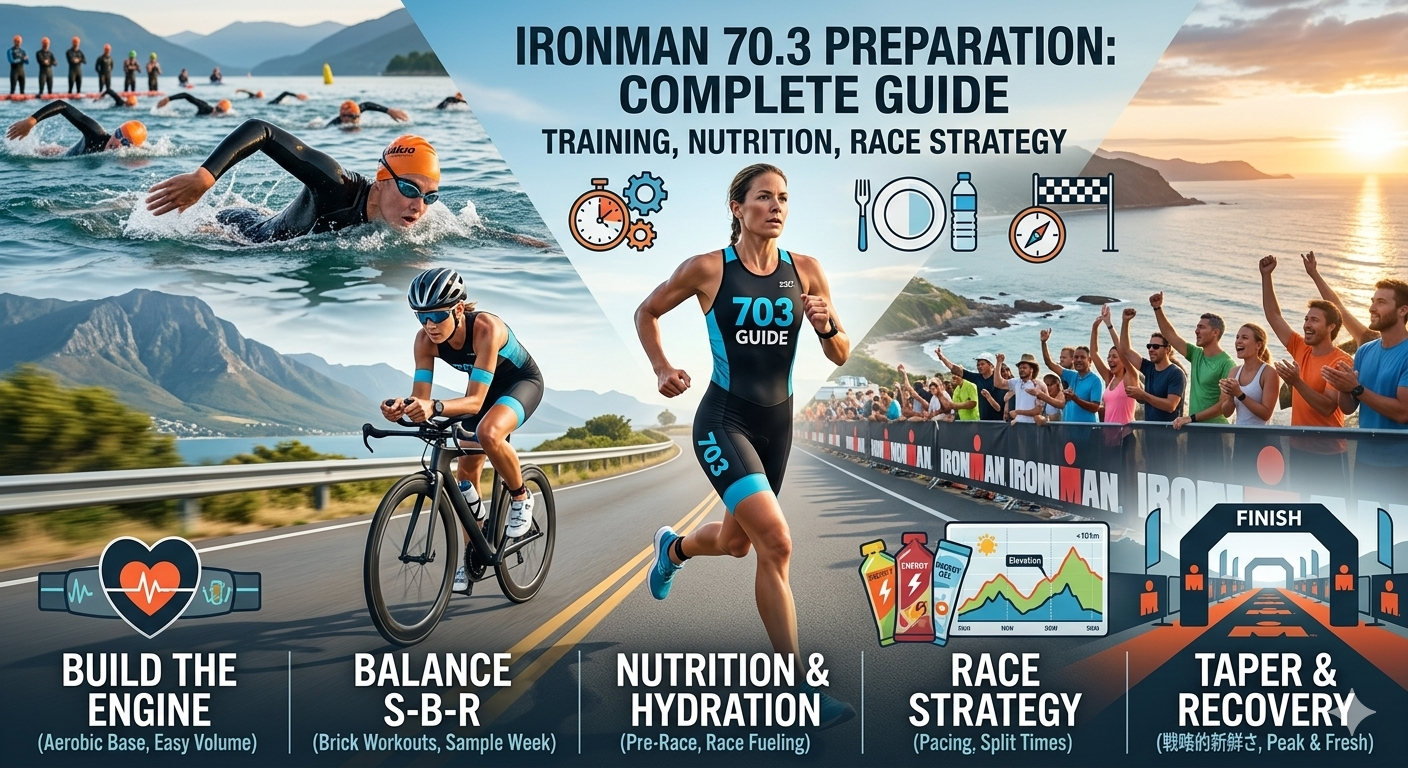
Ironman 70.3 Preparation: Complete Guide to Training, Nutrition, and Race Strategy
Introduction
An Ironman 70.3 is long enough to punish poor planning, but short enough to reward precision. That is what makes it such a fascinating race. You need the aerobic durability of an endurance athlete, the fueling discipline of a cyclist, the pacing control of a seasoned runner, and the calm execution of a triathlete who respects transitions, hydration, and recovery.
The good news is that most athletes do not need heroic training. They need consistent training, a realistic weekly structure, and a race strategy they can actually execute under fatigue.
Think of 70.3 preparation like building a bridge: your aerobic base is the foundation, your threshold work is the support structure, your race-specific sessions are the load test, and your taper is the final inspection before opening day. Skip one step, and the whole structure becomes fragile.
Training Structure: What Actually Matters
Build the engine first
A strong 70.3 performance starts with aerobic development. That means spending a large portion of your training in controlled endurance intensity rather than chasing hard sessions every day.
Your preparation usually works best in three broad phases:
1. Base phase
The goal here is to improve aerobic efficiency, movement economy, and technical consistency.
Focus on:
- Easy endurance volume
- Swim technique
- Bike cadence control
- Run durability
- Strength and mobility
This is where you earn the right to train harder later. Many athletes sabotage their season by rushing into interval-heavy training before building enough resilience.
2. Build phase
Now you start adding more race-relevant work.
Key elements:
- Threshold intervals
- Tempo efforts
- Long rides with controlled intensity
- Brick sessions
- Long runs off accumulated fatigue
This phase teaches your body to process effort efficiently near race pace without tipping into chaos.
3. Peak and taper phase
In the final weeks, the priority shifts from fitness-building to fitness-expression.
That means:
- Maintaining intensity
- Reducing total volume
- Rehearsing race fueling
- Sharpening transitions
- Arriving fresh, not flat
A good taper is not laziness. It is strategic freshness.
How to Balance Swim, Bike, and Run
In Ironman 70.3, the bike leg often determines the quality of your run. If you overbike, the half marathon turns into damage control.
A balanced week often includes:
- 2 to 3 swims
- 3 bikes
- 3 runs
- 1 to 2 strength sessions
- 1 full recovery day or very light day
Why the bike deserves special attention
The bike is the longest segment and the biggest opportunity to either save or waste energy. Good 70.3 athletes ride with control, not ego.
Your bike training should include:
- One long endurance ride
- One race-pace or sweet spot session
- One easy or skills-focused ride
- Regular brick integration
Why brick workouts matter
A brick session is not just about “running on tired legs.” It teaches neuromuscular adaptation, pacing discipline, and fueling execution.
Simple examples:
- Bike 90 minutes steady + run 20 minutes easy
- Bike with race-pace blocks + run building to half marathon pace
- Long ride + short controlled transition run
The goal is not to destroy yourself. It is to make T2 feel familiar.
Nutrition and Hydration: The Fourth Discipline
You cannot wing fueling in a 70.3. Poor nutrition turns strong legs into survival mode.
Before training and racing
Your pre-race meal should be:
- Familiar
- Easy to digest
- Rich in carbohydrate
- Low in unnecessary fiber and fat
For many athletes, breakfast 2 to 4 hours before the start works well. The exact amount depends on body size, gut tolerance, and race timing.
During the race
A practical target for many athletes is:
- Carbohydrates: around 60 to 90 g per hour, depending on tolerance and product mix
- Fluids: adjusted to sweat rate, temperature, and course conditions
- Sodium: based on sweat profile and heat demands
The bike is usually the best time to take in most of your calories. If you underfuel on the bike, the run often exposes it brutally.
A good rule: fuel early, sip consistently, do not wait for hunger.
Every athlete is unique. Nutrition, hydration, and sodium needs should be individualized with a qualified sports nutritionist, coach, or physician when possible.
Race Strategy: Pacing Wins the Day
Swim: Stay smooth, not heroic
The swim should feel controlled. Save energy by focusing on:
- Rhythm
- Relaxed breathing
- Efficient sighting
- Drafting when appropriate
If you spike effort early, you start the bike already in debt.
Bike: Ride within yourself
Your goal on the bike is not to prove fitness. It is to set up the best possible run.
Think:
- Controlled first third
- Steady middle section
- Disciplined final kilometers
If you use power, heart rate, or RPE, the principle is the same: stay under control early. Many races are lost by athletes who feel amazing for 40 km and terrible for the next 50.
Run: Start patient
The first 3 to 5 km of the run should feel almost too easy. That is normal. Let the race come to you.
A strong 70.3 run usually looks like:
- Patient opening
- Stable middle kilometers
- Composed final push
That is pacing maturity.
Practical Application
Example weekly structure
- Monday: Recovery swim + mobility
- Tuesday: Bike intervals + short transition run
- Wednesday: Endurance run + strength
- Thursday: Swim technique + tempo bike
- Friday: Easy run or full recovery
- Saturday: Long ride + brick run
- Sunday: Long run + easy swim
Checklist for race preparation
- Test race nutrition in training
- Practice T1 and T2
- Rehearse race kit
- Know your pacing plan
- Check course elevation and weather
- Taper volume, not confidence
- Prioritize sleep in race week
Common mistakes
- Going too hard on easy days
- Skipping swim technique
- Treating every brick like a race
- Underfueling the bike
- Starting the run too fast
- Arriving at taper mentally anxious and adding junk volume
Conclusion and CTA
Preparing for an Ironman 70.3 is less about perfection and more about consistent execution. Build your aerobic base, respect progressive overload, practice fueling, and race with restraint before aggression. In endurance sport, discipline beats drama.
If you want, I can also turn this into a fully optimized blog post for publication, a 70.3 training article with stronger commercial SEO intent, or a content cluster around Ironman 70.3, triathlon nutrition, tapering, and pacing.
FAQ
- How many weeks do I need to prepare for an Ironman 70.3?
For many athletes, 12 to 20 weeks is a realistic range, depending on current fitness, background in swim-bike-run, and race goals.
- How many hours per week should I train?
Most age-group athletes can prepare well with roughly 8 to 14 hours per week, though needs vary by experience, efficiency, and recovery capacity.
- Are brick workouts essential for a 70.3?
Yes. Brick workouts help you adapt to running off the bike, refine pacing, and test nutrition under realistic fatigue.
- What is the most important leg in an Ironman 70.3?
The bike is often the most decisive leg because it is the longest segment and strongly influences run performance.
- Should I carb load before a 70.3?
A structured carbohydrate-focused approach in the day before and pre-race window can help, but the exact strategy should match your digestion, body size, and race timing.
- How long should I taper for a Half Ironman?
A taper of about 7 to 14 days works well for many athletes, with reduced volume and preserved intensity.
- Can beginners complete an Ironman 70.3?
Yes, provided they build progressively, respect recovery, and develop sport-specific competence in all three disciplines.